Notes
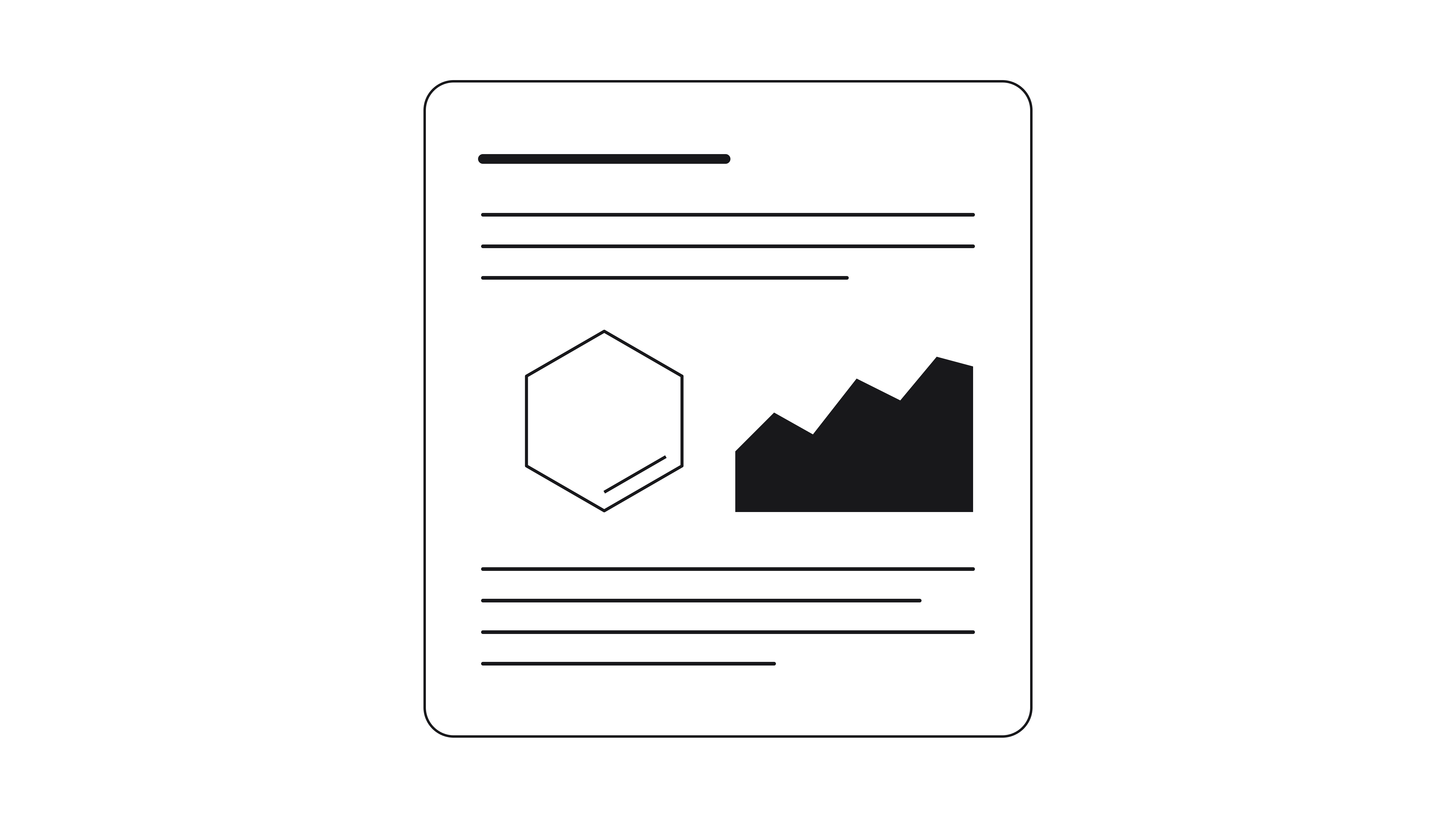
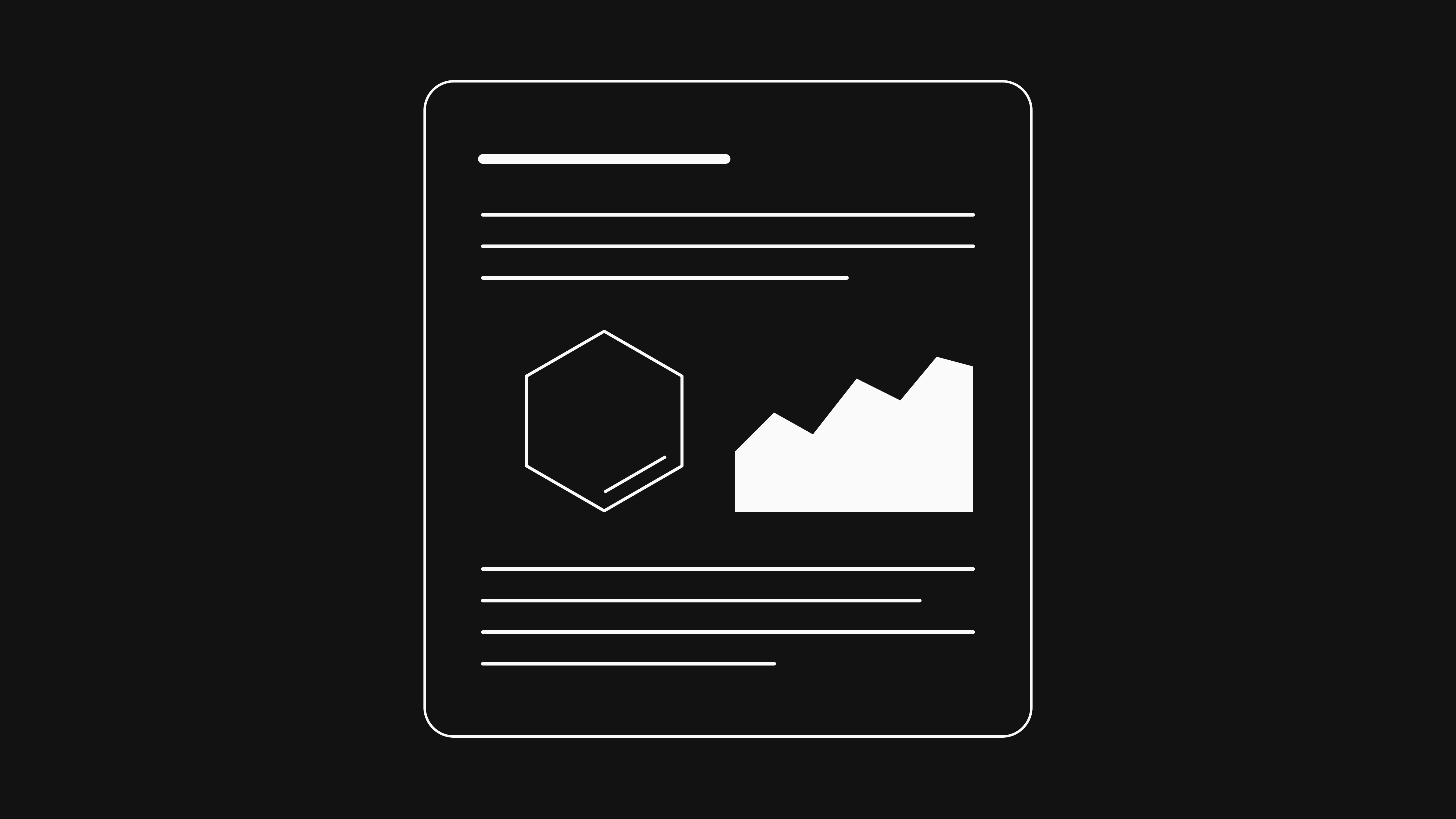
Whatever you find in your research, someone has to write it up for the people who decide: an executive summary for management, a memo for outside counsel or a list of follow-up tasks for a product team. A note is the place to do that inside Patalyze, right next to the data it talks about.
A note is a rich-text page inside a research. Where a table lists the records and a dashboard charts them, a note holds your conclusions, caveats and next steps in plain prose, with live links back to the patents, products and mappings behind them. Here is an example of a note:
It reads like any document: a title, a few sentences of judgment, a quoted warning and a checklist of what happens next. The publication numbers in it are live links, so a click brings you to the patent. That way the conclusion stays attached to the evidence it rests on.
Writing in a note#
A note is free-form. Start typing as you would in any document and press Enter for a new paragraph. If you think in Markdown, the usual shortcuts work: # starts a heading, - a bullet and > a quote. Type a colon to drop in an emoji.
Select any text to bring up a floating toolbar with bold, italic, headings, color and highlight. The toolbar formats text you have already written. To add something new, you insert a block.
Blocks#
A block is any element you insert into the page, from a heading to a live chart. Type / anywhere to open the block menu without leaving the keyboard, filter by typing and press Enter. The menu sorts what it offers into six groups.
Text#
The essentials of any written document: text, three heading levels, bullet, numbered and to-do lists, blockquotes and code blocks.
Structure#
Scaffolding for longer notes: a table for tabular asides, a table of contents that builds itself from your headings and a separator to break one section from the next.
Media#
There are four ways to put something other than words on the page:
- Image adds a picture with a caption and a size you can adjust by dragging.
- File previews an uploaded file in place, e.g. a PDF, a Word document or a spreadsheet.
- 3D model shows an uploaded STL file, for a shape that is hard to describe in words.
- Molecule draws the chemical structure of a compound.
A molecule block turns a SMILES string into a 2D chemical structure drawn in place. Paste the notation of a compound and the structure appears inline, so a write-up can show the chemistry it discusses instead of only naming it.
Charts#
A chart in a note keeps a verdict next to the evidence behind it, e.g. which companies own the field. It behaves exactly like a tile on a dashboard: it counts live records and redraws as the research changes. The block menu suggests a few charts that fit your research, and "Custom chart" lets you start from any chart type and configure it yourself.
Data#
Where a chart summarizes, a data block shows the rows. Insert a patent table or a product table and it behaves like a table page, with the same columns, the same filters and the same live records. Use it when the reader should see the actual shortlist.
Citations#
Citations tie a statement you make to the evidence underneath it. There are three kinds:
- Patent cites a claim, a paragraph of the description, a figure or the whole patent.
- Product cites a product's description.
- Mapping cites one claim of a claim chart.
Each citation drops a numbered reference into the sentence and adds the source to the reference rail beside the note, so a conclusion always carries the passage it rests on.
Click a number, either in the text or on the rail, and a preview of the cited passage opens right where you clicked. For a paragraph of a patent you see the description with that paragraph marked, and for a screenshot of a website we zoom in on the spot that was cited. From the preview you can open the patent or product page at that passage, open the website the screenshot came from, or simply open the source as a panel next to your note.
Links#
A note points back into the research it belongs to and out to the wider web. As you write, Patalyze turns publication numbers and the names of products and pages into live links, so a write-up stays tied to the records and mappings behind it even as the analysis grows.
Patents#
Type a publication number like US11888132B2 and it becomes a link to that patent. Patalyze recognizes standard publication numbers, i.e. a country code followed by the number such as EP3866227A1, and resolves each one against the corpus as you type. Hover a link to preview the patent and click it to open it.
Products#
Type a product's name and it links to that product the same way. Patalyze matches the names already in your research, so a product becomes linkable the moment it is added. A name shared by more than one product is left as plain text, so a link never points at the wrong one.
Pages#
Type the name of another page in the research and it links to that page, whether it is a table, a note or a dashboard. A page becomes linkable as soon as it is created.
External links#
For anything outside the research, links work as they do anywhere else. Select some text and paste a URL to link it, or type a bare address and Patalyze turns it into a hyperlink. The floating toolbar lets you add, edit or remove a link, and external links open in a new tab.
People#
Type @ to mention someone from your organization. That way you can leave a question for a colleague right where it applies.
Presenting and history#
To walk a room through your findings, you can present a finished note as slides without exporting anything. Choose "Present as slides" from the page menu and Patalyze turns the note into a deck: a cover slide first, then a new slide at every heading and separator, with each chart and each patent or product table on a slide of its own.
Every note also keeps its version history. Open "Version history" from the page menu to see how a conclusion changed over time and restore an earlier version if needed.
Agents and notes#
You don't have to write every note yourself. A research agent reads and writes notes as documents, and so does any external client connected via Model Context Protocol. For example, our standard skills for Freedom-to-Operate and Infringement Detection end with an executive summary note that leads with the verdict and cites the mappings behind it.
Notes also exist per record. A note attribute gives every patent or product a rich-text note of its own, which you can open from its table cell.